
In-memory, same-machine, and remote execution
Execution mode is where the Receiver runs relative to your Caller. The generated Graft and your
call site stay the same — Hypertube reads the resolved host from
GraftConfig and dispatches each invocation in memory, over a
localhost listener, or to a remote Gateway.
This page defines three terms that are often conflated in conversation and logs: in memory,
same machine, and remote. Use them precisely in architecture and troubleshooting
documentation. To change mode, set host before the first generated call — see
Configure Graft invocation. For host formats and
Gateway listeners, see Ports and protocols.
In memory
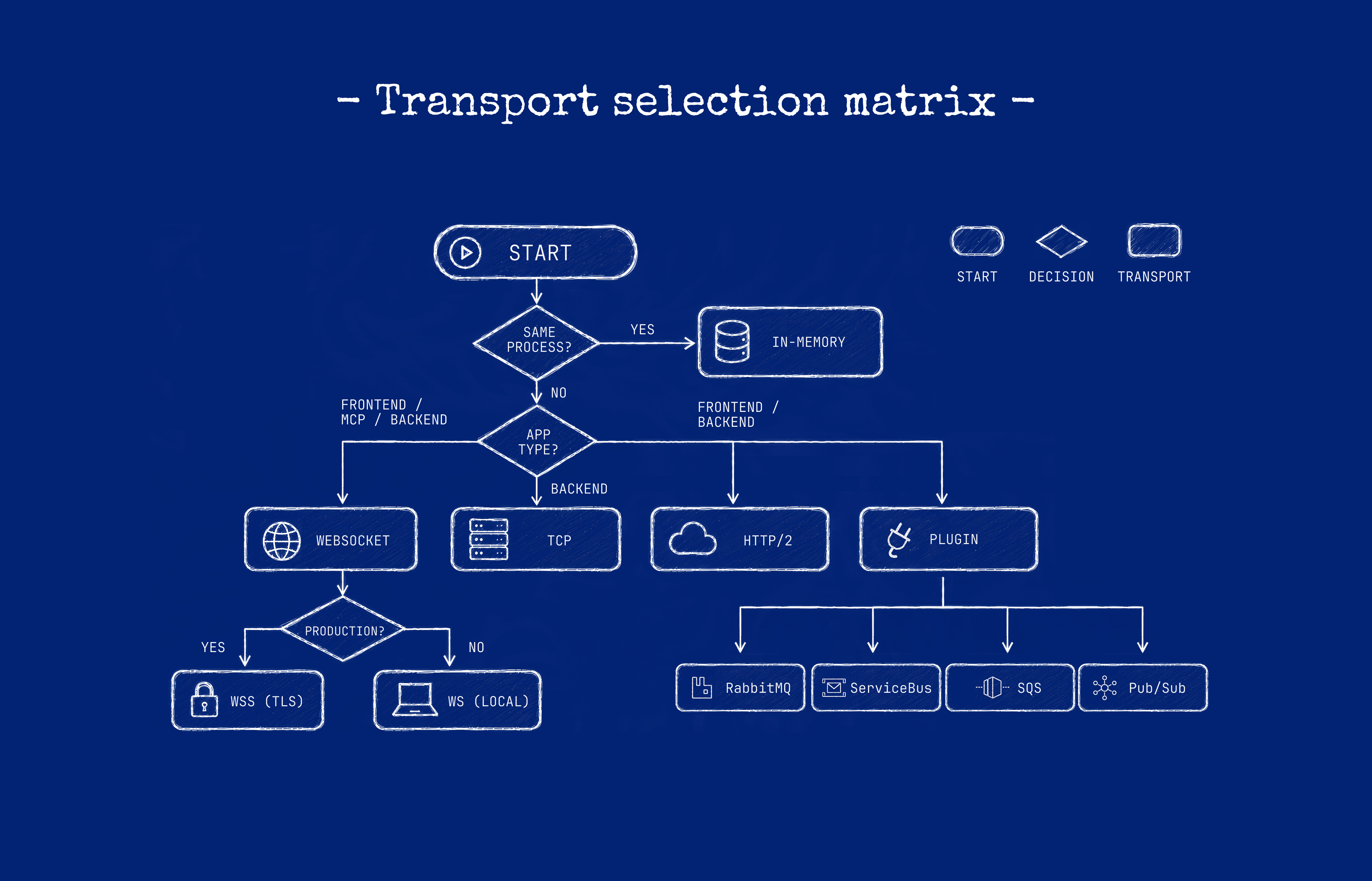
host=inmemory or host=in-memory runs the Receiver in the same process, without a network hop.
Do not describe in-memory calls as zero-copy, zero-serialization, or equivalent to a direct language-level call. Arguments and results are still represented and transferred.
Same machine
“Local” can mean a Gateway on localhost, another process on the same machine, or in-memory execution. These are different:
ws://localhost/...is still WebSocket network transport;tcp://localhost:portis still TCP;inmemoryselects in-memory connection data.
Use the precise term in architecture and troubleshooting documentation.
Remote
Remote configuration points at another process or machine. Current resolvers recognize WebSocket (ws://, wss://), HTTP/2 (HTTP(S) host values ending in h2), TCP (tcp://host:port or host:port), and plugin connection data.
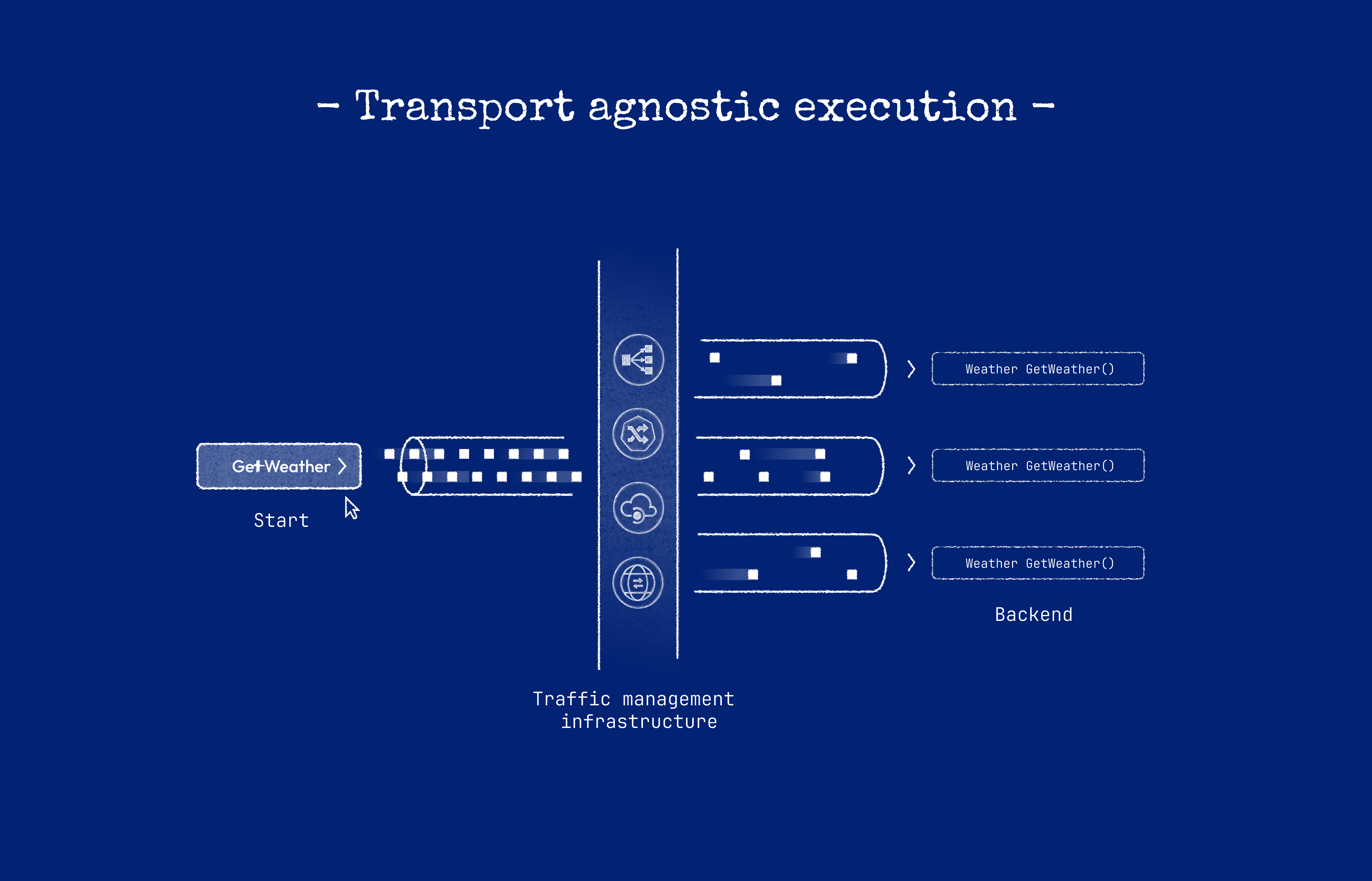
Remote execution adds transport availability, latency, authentication, routing, and partial-failure concerns. Generated typing does not remove those concerns.
Same package, different configuration
Generated Graft templates default Host/host to inmemory, and runtime-specific or global configuration can select another path. Whether a specific generated package contains the hosted module needed for in-memory execution is package- and ecosystem-dependent; verify the installed package contents and smoke test.