
Static and instance context
The callable surface and generated Grafts distinguish static operations from instance operations.
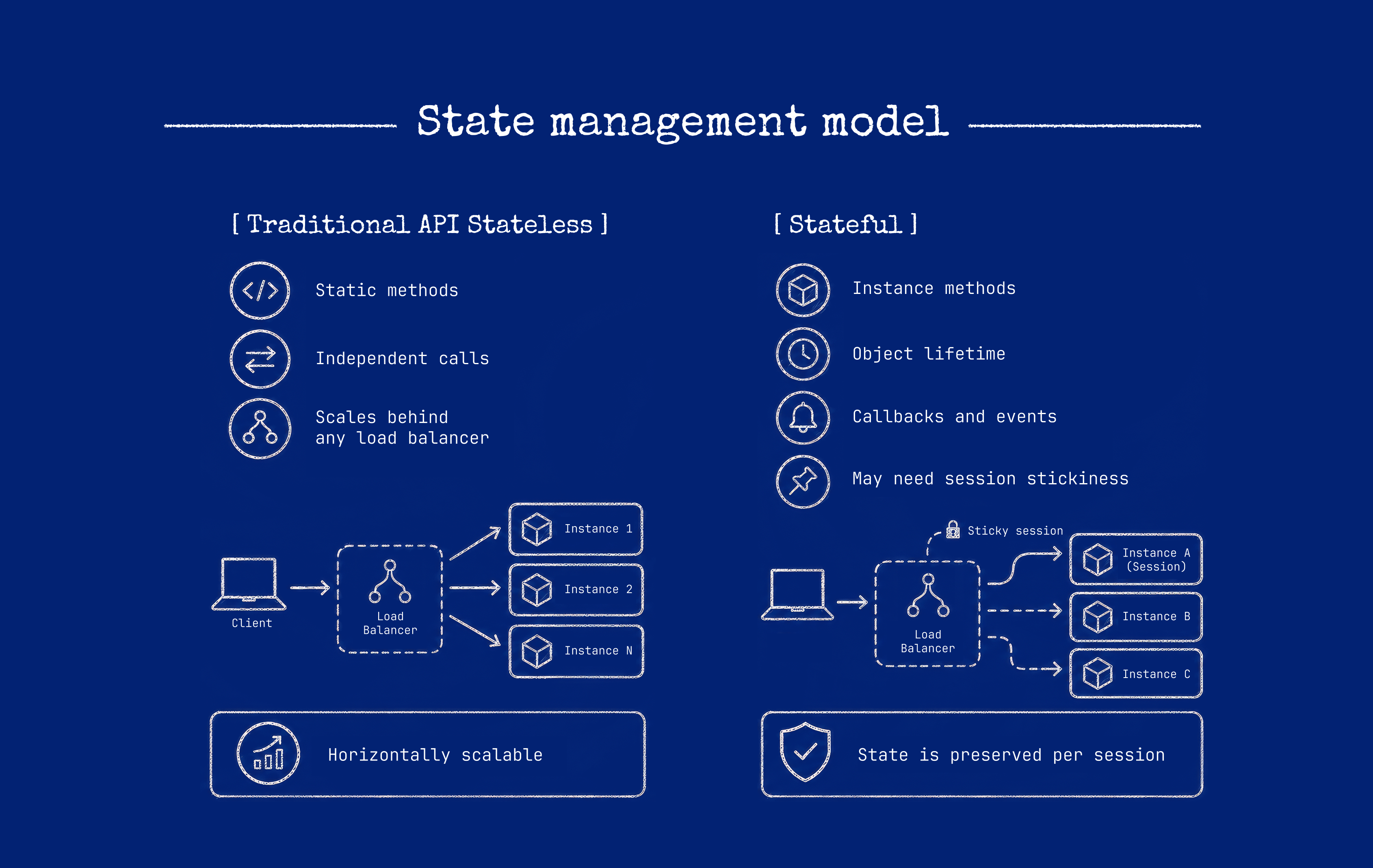
Static operations
A static method belongs to the type. The Graftcode Engine records it as a static operation, and generated wrappers invoke it without first constructing an object.
Static does not automatically mean stateless. A static implementation can still read or mutate process state. stateless is also a separate configuration value in generated GraftConfig.
Instance operations
Public constructors are represented separately, and instance methods are represented as INSTANCE_METHOD. Generated instance wrappers retain runtime object context used by subsequent operations.
This distinction is visible in Vision and in the generated static/instance calls.
Lifetime and routing caveat
Constructors and instance operations are generated and carry context. There is no universal object-lifetime guarantee across Gateway restarts, reconnects, retries, all transports, or all language pairs.
Treat an instance Graft as bound to runtime context. Do not persist it as a durable identifier unless a specific runtime and version documents and tests that behavior.
Choosing a shape
- Prefer static methods when the operation naturally depends only on supplied inputs and shared services.
- Prefer instances when constructor inputs and a sequence of operations are part of the domain model.
- Keep durable identity in explicit domain IDs when it must survive process or connection lifetime.
See Contract evolution before changing between static and instance forms; it changes generated Caller code.