
Choose your scenario
Use this page to route from your goal to a Quick start course and the documentation that explains the design behind it. Graftcode is best suited to callable behavior with an intentional programming interface; it is not a universal replacement for every protocol or data movement pattern.
Note
Hands-on first: Quick start has step-by-step tutorials. Return here and to the reference pages when you need concepts, constraints, or operations detail. See the full course index in
Start with your goal
Pick one of the five integration scenarios below, then open the matching section for runtime links and concepts to read next.
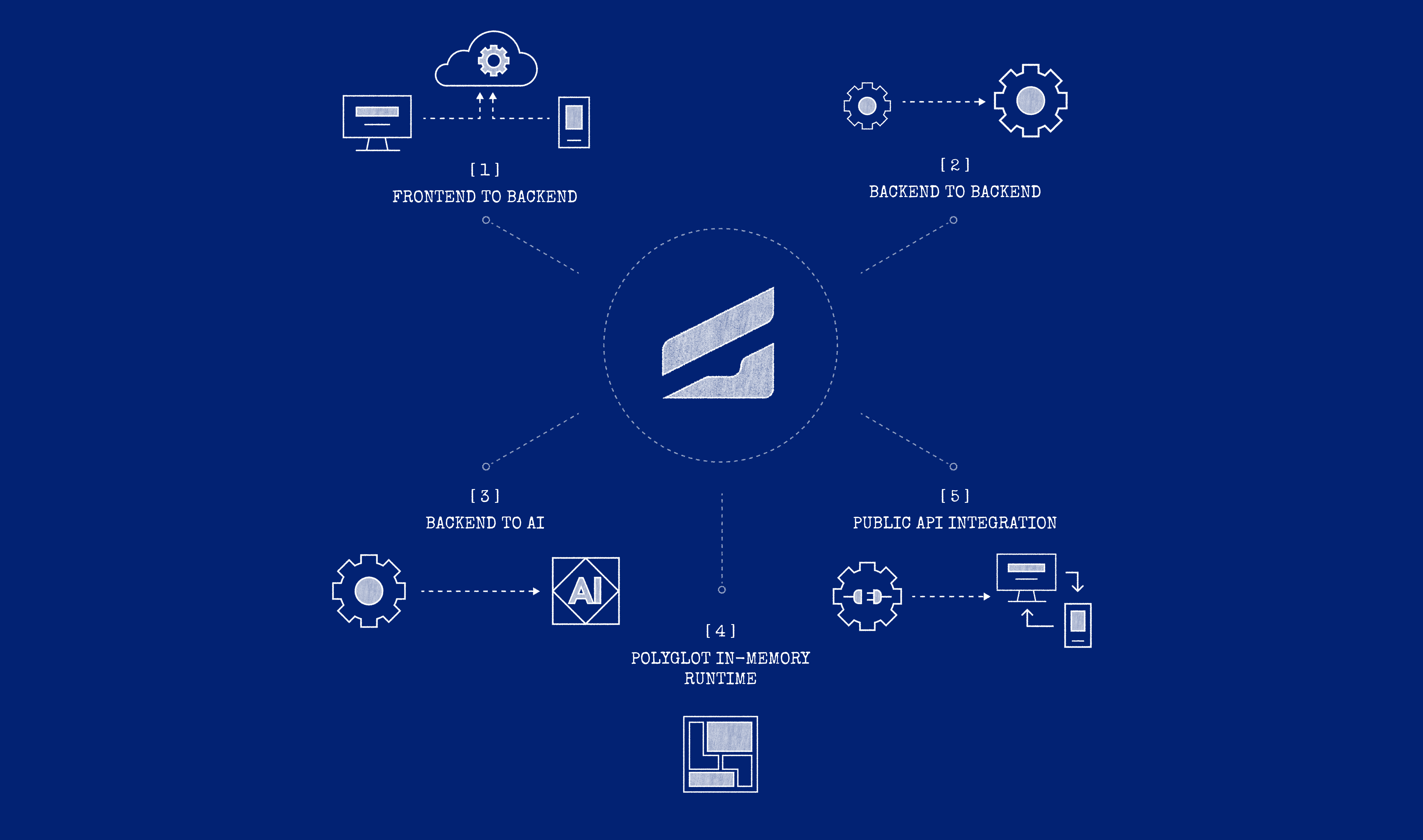
- Frontend to backend — browser, desktop, or mobile Caller → Connect frontend to backend
- Backend to backend — service-to-service → Connect microservices
- Backend to AI — expose methods as MCP tools → Expose MCP for AI
- Polyglot in-memory runtime — multiple languages in one process → Switch between monolith and microservices · Use modules from any technology
- Public API integration — make a Receiver callable for others → Expose a backend service
Before production
Review current status and limitations, supported runtimes and package managers, authentication and authorization, and scaling.